AI for Business

Explore the best AI for Business — independent reviews, comparisons, pricing and step-by-step how-to guides, curated by Aizhi.

  • Excalidraw

    Excalidraw

    Excalidraw is an open-source, web-based virtual whiteboard and diagramming application. It is used to create diagrams, wireframes, and sketches within a web browser without requiring account registration. The software features a characteristic hand-drawn visual style and supports real-time multi-user collaboration using client-side end-to-end encryption. Excalidraw is released under the MIT License and is maintained by Excalidraw s.r.o., a company based in Brno, Czech Republic. == History == Excalidraw was created on 1 January 2020 by Christopher Chedeau, a software engineer at Meta Platforms. Chedeau, who previously co-created React Native and Prettier, initially developed the application as a personal project before registering the domain on 3 January 2020. Within its first months, the project attracted open-source contributors who assisted in expanding its features and rewriting the codebase into TypeScript and React. By early 2021, day-to-day operations moved to Czech developers David Luzar and Milos Vetesnik. In May 2021, the team incorporated Excalidraw s.r.o. in Brno and launched a commercial cloud-based version named Excalidraw+ to fund the open-source project's development. By May 2026, the main open-source repository on GitHub had accumulated over 123,000 stars. == Features and architecture == The application provides an infinite canvas for geometric shapes, lines, arrows, text, and freehand drawing. Its visual presentation relies on Rough.js, a JavaScript graphics library that alters standard vector paths to mimic irregular, hand-drawn lines. Excalidraw operates as a Progressive web application (PWA), allowing local installation and offline usage, saving data natively to local browser storage. Files use a native, JSON-based extension format (.excalidraw), and canvases can be exported to PNG or SVG formats. Real-time collaboration sessions are executed using Socket.IO via a relay server. Data transmission uses the browser's native Web Cryptography API to achieve end-to-end encryption. A symmetric AES key is generated on the client side and appended to the sharing URL as a fragment identifier (following the # character). Because web browsers do not transmit URL fragments to HTTP servers, the data remains unreadable to the distribution server. == Ecosystem == Excalidraw is distributed as an npm package, allowing third-party developers to embed the whiteboard component directly into external React web applications. Community-developed extensions integrate the application's file format into text editors and note-taking systems, including Visual Studio Code and Obsidian. The platform also has native integrations in commercial platforms such as Notion and HackerRank. == Reception == Google's developer relations team published a technical case study on Excalidraw as a reference implementation for Progressive Web Apps. The analysis highlighted the software's adoption of advanced web platform capabilities, specifically its utilization of the File System Access API and native Clipboard API to replicate desktop software behavior within a web browser environment.

    Read more →
  • Simple Knowledge Organization System

    Simple Knowledge Organization System

    Simple Knowledge Organization System (SKOS) is a W3C recommendation designed for representation of thesauri, classification schemes, taxonomies, subject-heading systems, or any other type of structured controlled vocabulary. SKOS is part of the Semantic Web family of standards built upon RDF and RDFS, and its main objective is to enable easy publication and use of such vocabularies as linked data. == History == === DESIRE II project (1997–2000) === The most direct ancestor to SKOS was the RDF Thesaurus work undertaken in the second phase of the EU DESIRE project . Motivated by the need to improve the user interface and usability of multi-service browsing and searching, a basic RDF vocabulary for Thesauri was produced. As noted later in the SWAD-Europe workplan, the DESIRE work was adopted and further developed in the SOSIG and LIMBER projects. A version of the DESIRE/SOSIG implementation was described in W3C's QL'98 workshop, motivating early work on RDF rule and query languages: A Query and Inference Service for RDF. === LIMBER (1999–2001) === SKOS built upon the output of the Language Independent Metadata Browsing of European Resources (LIMBER) project funded by the European Community, and part of the Information Society Technologies programme. In the LIMBER project CCLRC further developed an RDF thesaurus interchange format which was demonstrated on the European Language Social Science Thesaurus (ELSST) at the UK Data Archive as a multilingual version of the English language Humanities and Social Science Electronic Thesaurus (HASSET) which was planned to be used by the Council of European Social Science Data Archives CESSDA. === SWAD-Europe (2002–2004) === SKOS as a distinct initiative began in the SWAD-Europe project, bringing together partners from both DESIRE, SOSIG (ILRT) and LIMBER (CCLRC) who had worked with earlier versions of the schema. It was developed in the Thesaurus Activity Work Package, in the Semantic Web Advanced Development for Europe (SWAD-Europe) project. SWAD-Europe was funded by the European Community, and part of the Information Society Technologies programme. The project was designed to support W3C's Semantic Web Activity through research, demonstrators and outreach efforts conducted by the five project partners, ERCIM, the ILRT at Bristol University, HP Labs, CCLRC and Stilo. The first release of SKOS Core and SKOS Mapping were published at the end of 2003, along with other deliverables on RDF encoding of multilingual thesauri and thesaurus mapping. === Semantic web activity (2004–2005) === Following the termination of SWAD-Europe, SKOS effort was supported by the W3C Semantic Web Activity in the framework of the Best Practice and Deployment Working Group. During this period, focus was put both on consolidation of SKOS Core, and development of practical guidelines for porting and publishing thesauri for the Semantic Web. === Development as W3C Recommendation (2006–2009) === The SKOS main published documents — the SKOS Core Guide, the SKOS Core Vocabulary Specification, and the Quick Guide to Publishing a Thesaurus on the Semantic Web — were developed through the W3C Working Draft process. Principal editors of SKOS were Alistair Miles, initially Dan Brickley, and Sean Bechhofer. The Semantic Web Deployment Working Group, chartered for two years (May 2006 – April 2008), put in its charter to push SKOS forward on the W3C Recommendation track. The roadmap projected SKOS as a Candidate Recommendation by the end of 2007, and as a Proposed Recommendation in the first quarter of 2008. The main issues to solve were determining its precise scope of use, and its articulation with other RDF languages and standards used in libraries (such as Dublin Core). === Formal release (2009) === On August 18, 2009, W3C released the new standard that builds a bridge between the world of knowledge organization systems – including thesauri, classifications, subject headings, taxonomies, and folksonomies – and the linked data community, bringing benefits to both. Libraries, museums, newspapers, government portals, enterprises, social networking applications, and other communities that manage large collections of books, historical artifacts, news reports, business glossaries, blog entries, and other items can now use SKOS to leverage the power of linked data. === Historical view of components === SKOS was originally designed as a modular and extensible family of languages, organized as SKOS Core, SKOS Mapping, and SKOS Extensions, and a Metamodel. The entire specification is now complete within the namespace http://www.w3.org/2004/02/skos/core#. == Overview == In addition to the reference itself, the SKOS Primer (a W3C Working Group Note) summarizes the Simple Knowledge Organization System. The SKOS defines the classes and properties sufficient to represent the common features found in a standard thesaurus. It is based on a concept-centric view of the vocabulary, where primitive objects are not terms, but abstract notions represented by terms. Each SKOS concept is defined as an RDF resource. Each concept can have RDF properties attached, including: one or more preferred index terms (at most one in each natural language) alternative terms or synonyms definitions and notes, with specification of their language Concepts can be organized in hierarchies using broader-narrower relationships, or linked by non-hierarchical (associative) relationships. Concepts can be gathered in concept schemes, to provide consistent and structured sets of concepts, representing whole or part of a controlled vocabulary. === Element categories === The principal element categories of SKOS are concepts, labels, notations, documentation, semantic relations, mapping properties, and collections. The associated elements are listed in the table below. === Concepts === The SKOS vocabulary is based on concepts. Concepts are the units of thought—ideas, meanings, or objects and events (instances or categories)—which underlie many knowledge organization systems. As such, concepts exist in the mind as abstract entities which are independent of the terms used to label them. In SKOS, a Concept (based on the OWL Class) is used to represent items in a knowledge organization system (terms, ideas, meanings, etc.) or such a system's conceptual or organizational structure. A ConceptScheme is analogous to a vocabulary, thesaurus, or other way of organizing concepts. SKOS does not constrain a concept to be within a particular scheme, nor does it provide any way to declare a complete scheme—there is no way to say the scheme consists only of certain members. A topConcept is (one of) the upper concept(s) in a hierarchical scheme. === Labels and notations === Each SKOS label is a string of Unicode characters, optionally with language tags, that are associated with a concept. The prefLabel is the preferred human-readable string (maximum one per language tag), while altLabel can be used for alternative strings, and hiddenLabel can be used for strings that are useful to associate, but not meant for humans to read. A SKOS notation is similar to a label, but this literal string has a datatype, like integer, float, or date; the datatype can even be made up (see 6.5.1 Notations, Typed Literals and Datatypes in the SKOS Reference). The notation is useful for classification codes and other strings not recognizable as words. === Documentation === The Documentation or Note properties provide basic information about SKOS concepts. All the properties are considered a type of skos:note; they just provide more specific kinds of information. The property definition, for example, should contain a full description of the subject resource. More specific note types can be defined in a SKOS extension, if desired. A query for skos:note ? will obtain all the notes about , including definitions, examples, and scope, history and change, and editorial documentation. Any of these SKOS Documentation properties can refer to several object types: a literal (e.g., a string); a resource node that has its own properties; or a reference to another document, for example using a URI. This enables the documentation to have its own metadata, like creator and creation date. Specific guidance on SKOS documentation properties can be found in the SKOS Primer Documentary Notes. === Semantic relations === SKOS semantic relations are intended to provide ways to declare relationships between concepts within a concept scheme. While there are no restrictions precluding their use with two concepts from separate schemes, this is discouraged because it is likely to overstate what can be known about the two schemes, and perhaps link them inappropriately. The property related simply makes an association relationship between two concepts; no hierarchy or generality relation is implied. The properties broader and narrower are used to assert a direct hierarchical link between two concepts. The meaning may be unexpected; the relat

    Read more →
  • Kinect

    Kinect

    Kinect is a discontinued line of motion sensing input devices produced by Microsoft and first released in 2010. The devices generally contain RGB cameras, and infrared projectors and detectors that map depth through either structured light or time of flight calculations, which can in turn be used to perform real-time gesture recognition and body skeletal detection, among other capabilities. They also contain microphones that can be used for speech recognition and voice control. Kinect was originally developed as a motion controller peripheral for Xbox video game consoles, distinguished from competitors (such as Nintendo's Wii Remote and Sony's PlayStation Move) by not requiring physical controllers. The first-generation Kinect was based on technology from Israeli company PrimeSense, and unveiled at E3 2009 as a peripheral for Xbox 360 codenamed "Project Natal". It was first released on November 4, 2010, and would go on to sell eight million units in its first 60 days of availability. The majority of the games developed for Kinect were casual, family-oriented titles, which helped to attract new audiences to Xbox 360, but did not result in wide adoption by the console's existing, overall userbase. As part of the 2013 unveiling of Xbox 360's successor, Xbox One, Microsoft unveiled a second-generation version of Kinect with improved tracking capabilities. Microsoft also announced that Kinect would be a required component of the console, and that it would not function unless the peripheral is connected. The requirement proved controversial among users and critics due to privacy concerns, prompting Microsoft to backtrack on the decision. However, Microsoft still bundled the new Kinect with Xbox One consoles upon their launch in November 2013. A market for Kinect-based games still did not emerge after the Xbox One's launch; Microsoft would later offer Xbox One hardware bundles without Kinect included, and later revisions of the console removed the dedicated ports used to connect it (requiring a powered USB adapter instead). Microsoft ended production of Kinect for Xbox One in October 2017. Kinect has also been used as part of non-game applications in academic and commercial environments, as it was cheaper and more robust than other depth-sensing technologies at the time. While Microsoft initially objected to such applications, it later released software development kits (SDKs) for the development of Microsoft Windows applications that use Kinect. In 2020, Microsoft released Azure Kinect as a continuation of the technology integrated with the Microsoft Azure cloud computing platform. Part of the Kinect technology was also used within Microsoft's HoloLens project. Microsoft discontinued the Azure Kinect developer kits in October 2023. == History == === Development === The origins of the Kinect started around 2005, at a point where technology vendors were starting to develop depth-sensing cameras. Microsoft had been interested in a 3D camera for the Xbox line earlier but because the technology had not been refined, had placed it in the "Boneyard", a collection of possible technology they could not immediately work on. In 2005, Israeli company PrimeSense was founded by mathematicians and engineers to develop the "next big thing" for video games, incorporating cameras that were capable of mapping a human body in front of them and sensing hand motions. They showed off their system at the 2006 Game Developers Conference, where Microsoft's Alex Kipman, the general manager of hardware incubation, saw the potential in PrimeSense's technology for the Xbox system. Microsoft began discussions with PrimeSense about what would need to be done to make their product more consumer-friendly: not only improvements in the capabilities of depth-sensing cameras, but a reduction in size and cost, and a means to manufacture the units at scale was required. PrimeSense spent the next few years working at these improvements. Nintendo released the Wii in November 2006. The Wii's central feature was the Wii Remote, a handheld device that was detected by the Wii through a motion sensor bar mounted onto a television screen to enable motion controlled games. Microsoft felt pressure from the Wii, and began looking into depth-sensing in more detail with PrimeSense's hardware, but could not get to the level of motion tracking they desired. While they could determine hand gestures, and sense the general shape of a body, they could not do skeletal tracking. A separate path within Microsoft looked to create an equivalent of the Wii Remote, considering that this type of unit may become standardized similar to how two-thumbstick controllers became a standard feature. However, it was still ultimately Microsoft's goal to remove any device between the player and the Xbox. Kudo Tsunoda and Darren Bennett joined Microsoft in 2008, and began working with Kipman on a new approach to depth-sensing aided by machine learning to improve skeletal tracking. They internally demonstrated this and established where they believed the technology could be in a few years, which led to the strong interest to fund further development of the technology; this has also occurred at a time that Microsoft executives wanted to abandon the Wii-like motion tracking approach, and favored the depth-sensing solution to present a product that went beyond the Wii's capabilities. The project was greenlit by late 2008 with work started in 2009. The project was codenamed "Project Natal" after the Brazilian city Natal, Kipman's birthplace. Additionally, Kipman recognized the Latin origins of the word "natal" to mean "to be born", reflecting the new types of audiences they hoped to draw with the technology. Much of the initial work was related to ethnographic research to see how video game players' home environments were laid out, lit, and how those with Wiis used the system to plan how Kinect units would be used. The Microsoft team discovered from this research that the up-and-down angle of the depth-sensing camera would either need to be adjusted manually, or would require an expensive motor to move automatically. Upper management at Microsoft opted to include the motor despite the increased cost to avoid breaking game immersion. Kinect project work also involved packaging the system for mass production and optimizing its performance. Hardware development took around 22 months. During hardware development, Microsoft engaged with software developers to use Kinect. Microsoft wanted to make games that would be playable by families since Kinect could sense multiple bodies in front of it. One of the first internal titles developed for the device was the pack-in game Kinect Adventures developed by Good Science Studio that was part of Microsoft Studios. One of the game modes of Kinect Adventures was "Reflex Ridge", based on the Japanese Brain Wall game where players attempt to contort their bodies in a short time to match cutouts of a wall moving at them. This type of game was a key example of the type of interactivity they wanted with Kinect, and its development helped feed into the hardware improvements. Another development was Project Milo, a prototype game developed by Lionhead Studios led by Peter Molyneux where the player could interact with a virtual avatar through motion controls and voice recognition. Lionhead had developed the project based on original capabilities of the Kinect, but according to Molyneux, Microsoft had found that a consumer-grade version of the Kinect would cost thousands of dollars, so they scaled back the device and refocused the role of games for the Kinect to be more casual games as seen on the Wii. As a result, Project Milo no longer fit Microsoft's portfolio and was cancelled. Nearing the planned release, there was a problem of widespread testing of Kinect in various room types and different bodies accounting for age, gender, and race among other factors, while keeping the details of the unit confidential. Microsoft engaged in a company-wide program offering employees to take home Kinect units to test them. Microsoft also brought other non-gaming divisions, including its Microsoft Research, Microsoft Windows, and Bing teams to help complete the system. Microsoft established its own large-scale manufacturing facility to bulk product Kinect units and test them. === Introduction === Kinect was first announced to the public as "Project Natal" on June 1, 2009, during Microsoft's press conference at E3 2009; film director Steven Spielberg joined Microsoft's Don Mattrick to introduce the technology and its potential. Three demos were presented during the conference—Microsoft's Ricochet and Paint Party, and Lionhead Studios' Milo & Kate created by Peter Molyneux—while a Project Natal-enabled version of Criterion Games' Burnout Paradise was shown during the E3 exhibition. By E3 2009, the skeletal mapping technology was capable of simultaneously tracking four people, with a feature extraction of 4

    Read more →
  • Framework Convention on Artificial Intelligence

    Framework Convention on Artificial Intelligence

    The Framework Convention on Artificial Intelligence and Human Rights, Democracy and the Rule of Law (also called Framework Convention on Artificial Intelligence or AI convention) is an international treaty on artificial intelligence. It was adopted under the auspices of the Council of Europe (CoE) and signed on 5 September 2024. The treaty aims to ensure that the development and use of AI technologies align with fundamental human rights, democratic values, and the rule of law, addressing risks such as misinformation, algorithmic discrimination, and threats to public institutions. More than 50 countries, including the EU member states, have endorsed the Framework Convention on Artificial Intelligence. == Background == The development of the Framework Convention on AI emerged in response to growing concerns over the ethical, legal, and societal impacts of artificial intelligence. The Council of Europe, which has historically played a key role in setting human rights standards across Europe, initiated discussions on AI governance in 2020, leading to the drafting of a binding legal framework. The process of creating the Framework Convention began in 2019 with the ad hoc Committee on Artificial Intelligence (CAHAI) assessing the feasibility of the instrument. In 2022, the Committee on Artificial Intelligence (CAI) took over the process, drafting and negotiating the text of the Convention. The treaty is designed to complement existing international human rights instruments, including the European Convention on Human Rights and the Convention for the Protection of Individuals with regard to Automatic Processing of Personal Data. == Structure and content == The Convention establishes fundamental principles for AI governance, including transparency, accountability, non-discrimination, and human rights protection through eight chapters and 26 articles. Adopted in 2024, this landmark treaty addresses AI governance through seven core principles and detailed implementation mechanisms. It mandates risk and impact assessments to mitigate potential harms and provides safeguards such as the right to challenge AI-driven decisions. It applies to public authorities and private entities acting on their behalf but excludes national security and defense activities. Implementation is overseen by a Conference of the Parties, ensuring compliance and international cooperation. Activities within the AI system lifecycle must adhere to seven fundamental principles, ensuring compliance with human rights, democracy, and the rule of law. The treaty also establishes remedies, procedural rights and safeguards, and risk and impact management requirements to promote accountability, transparency, and responsible AI development. The treaty consists of five chapters. Chapter I contains general provisions. Chapter II states the general obligation to protect human rights and the integrity of democratic processes and respect of the rule of law. The main principles and rights are contained in Chapter III, which consists of Articles 6 to 13. Chapter IV (Articles 14 to 15) sets up the legal remedies. Chapter V states the risk and impact management framework. Chapter VI facilitates the implementation criteria of the treaty. Chapter VII sets the co-operation and oversight mechanisms. Chapter VIII contains various concluding clauses. Article 1 declares the objectives of the treaty, to ensure that activities within the lifecycle of artificial intelligence systems are fully consistent with human rights, democracy and the rule of law. == Entry into force == The treaty will enter into force on the first day of the month following the expiration of a period of three months after the date on which five ratification made by five countries, including three member states of the Council of Europe. == Competing approaches == While the CoE's AI Convention represents a multilateral effort to regulate AI through a human rights-based approach, alternative frameworks have also been proposed. One notable example is the Munich Draft for a Convention on AI, Data and Human Rights, an initiative led by legal scholars and policymakers in Germany. The Munich Draft advocates for stronger safeguards against AI-related risks, emphasizing stricter data protection measures, accountability for AI developers, and explicit prohibitions on high-risk AI applications, such as mass surveillance and autonomous lethal weapons. Unlike the CoE convention, which focuses on balancing innovation with regulation, the Munich Draft takes a more precautionary stance, calling for tighter controls over AI deployment in sensitive domains. Other competing international efforts include the OECD’s AI Principles, the GPAI (Global Partnership on AI), and the European Union's AI Act, each of which offers different regulatory strategies to govern AI at regional and global levels. == Signatories == Signatories include Andorra, Canada, the European Union, Georgia, Iceland, Israel, Japan, Liechtenstein, the Republic of Moldova, Montenegro, Norway, San Marino, Switzerland, Ukraine, the United Kingdom, the United States, and Uruguay. == Endorsement == The treaty was widely endorsed by leading AI policy experts, including Stuart J. Russell, Virginia Dignum, Emma Ruttkamp-Bloem, Pascal Pichonnaz, Maria Helen Murphy, Angella Ndaka, Hannes Werthner, Katja Langenbucher, Gry Hasselbalch, Ricardo Baeza-Yates, Kutoma Wakunuma, Gianclaudio Malgieri, Oreste Pollicino, Nagla Rizk, Giovanni Sartor, Lee Tiedrich, Ingrid Schneider, Eduardo Bertoni, Garry Kasparov, Merve Hikcok, and Marc Rotenberg. The treaty was also endorsed by notable political leaders, including Theodoros Roussopoulos, President of the Parliamentart Assembly in the Council of Europe, and Christopher Holmes, Member of the House of Lords of the United Kingdom, and by the International Bar Association (IBA), and personally by Almudena Arpón de Mendívil, President of the IBA. The Center for AI and Digital Policy (CAIDP) has been carrying out a campaign to promote endorsement of the treaty by urging various countries to sign and ratify the treaty. The CAIDP further urged the countries to make a clear and firm commitment to ensure the full inclusion of the private sector under the treaty’s provisions.

    Read more →
  • Image scaling

    Image scaling

    In computer graphics and digital imaging, image scaling is the resizing of a digital image. In video technology, the magnification of digital material is known as upscaling or resolution enhancement. When scaling a vector graphic image, the graphic primitives that make up the image can be rendered using geometric transformations at any resolution with no loss of image quality. When scaling a raster graphics image, a new image with a higher or lower number of pixels must be generated. In the case of decreasing the pixel number (scaling down), this usually results in a visible quality loss. From the standpoint of digital signal processing, the scaling of raster graphics is a two-dimensional example of sample-rate conversion, the conversion of a discrete signal from a sampling rate (in this case, the local sampling rate) to another. == Mathematical == Image scaling can be interpreted as a form of image resampling or image reconstruction from the view of the Nyquist sampling theorem. According to the theorem, downsampling to a smaller image from a higher-resolution original can only be carried out after applying a suitable 2D anti-aliasing filter to prevent aliasing artifacts. The image is reduced to the information that can be carried by the smaller image. In the case of up sampling, a reconstruction filter takes the place of the anti-aliasing filter. A more sophisticated approach to upscaling treats the problem as an inverse problem, solving the question of generating a plausible image that, when scaled down, would look like the input image. A variety of techniques have been applied for this, including optimization techniques with regularization terms and the use of machine learning from examples. == Algorithms == An image size can be changed in several ways. === Nearest-neighbor interpolation === One of the simpler ways of increasing image size is nearest-neighbor interpolation, replacing every pixel with the nearest pixel in the output; for upscaling, this means multiple pixels of the same color will be present. This can preserve sharp details but also introduce jaggedness in previously smooth images. 'Nearest' in nearest-neighbor does not have to be the mathematical nearest. One common implementation is to always round toward zero. Rounding this way produces fewer artifacts and is faster to calculate. This algorithm is often preferred for images which have little to no smooth edges. A common application of this can be found in pixel art. === Bilinear and bicubic interpolation === Bilinear interpolation works by interpolating pixel color values, introducing a continuous transition into the output even where the original material has discrete transitions. Although this is desirable for continuous-tone images, this algorithm reduces contrast (sharp edges) in a way that may be undesirable for line art. Bicubic interpolation yields substantially better results, with an increase in computational cost. === Sinc and Lanczos resampling === Sinc resampling, in theory, provides the best possible reconstruction for a perfectly bandlimited signal. In practice, the assumptions behind sinc resampling are not completely met by real-world digital images. Lanczos resampling, an approximation to the sinc method, yields better results. Bicubic interpolation can be regarded as a computationally efficient approximation to Lanczos resampling. === Box sampling === One weakness of bilinear, bicubic, and related algorithms is that they sample a specific number of pixels. When downscaling below a certain threshold, such as more than twice for all bi-sampling algorithms, the algorithms will sample non-adjacent pixels, which results in both losing data and rough results. The trivial solution to this issue is box sampling, which is to consider the target pixel a box on the original image and sample all pixels inside the box. This ensures that all input pixels contribute to the output. The major weakness of this algorithm is that it is hard to optimize. === Mipmap === Another solution to the downscale problem of bi-sampling scaling is mipmaps. A mipmap is a prescaled set of downscaled copies. When downscaling, the nearest larger mipmap is used as the origin to ensure no scaling below the useful threshold of bilinear scaling. This algorithm is fast and easy to optimize. It is standard in many frameworks, such as OpenGL. The cost is using more image memory, exactly one-third more in the standard implementation. === Fourier-transform methods === Simple interpolation based on the Fourier transform pads the frequency domain with zero components (a smooth window-based approach would reduce the ringing). Besides the good conservation (or recovery) of details, notable are the ringing and the circular bleeding of content from the left border to the right border (and the other way around). === Edge-directed interpolation === Edge-directed interpolation algorithms aim to preserve edges in the image after scaling, unlike other algorithms, which can introduce staircase artifacts. Examples of algorithms for this task include New Edge-Directed Interpolation (NEDI), Edge-Guided Image Interpolation (EGGI), Iterative Curvature-Based Interpolation (ICBI), and Directional Cubic Convolution Interpolation (DCCI). A 2013 analysis found that DCCI had the best scores in peak signal-to-noise ratio and structural similarity on a series of test images. === hqx === For magnifying computer graphics with low resolution and/or few colors (usually from 2 to 256 colors), better results can be achieved by hqx or other pixel-art scaling algorithms. These produce sharp edges and maintain a high level of detail. === Vectorization === Vector extraction, or vectorization, offers another approach. Vectorization first creates a resolution-independent vector representation of the graphic to be scaled. The resulting SVG vector file can then be exported and rendered at any required resolution without quality loss, serving directly as production-ready artwork for scalable display & printing. This technique is used by Adobe Illustrator, Live Trace, and Inkscape. Scalable Vector Graphics are well suited to simple geometric images, while photographs do not fare well with vectorization due to their complexity. === Deep convolutional neural networks === This method uses machine learning for more detailed images, such as photographs and complex artwork. Programs that use this method include waifu2x, Imglarger and Neural Enhance. Demonstration of conventional vs. waifu2x upscaling with noise reduction, using a detail of Phosphorus and Hesperus by Evelyn De Morgan. [Click image for full size] AI-driven upscaling software allows detail and sharpness to be added to historical photographs, where it is not present in the original. The availability of AI upscaling tools has led to confusion where a person believes that the upscaled version of a blurry image is genuinely showing them the subject of the original photograph. In 2025 a user of the social media site X posted an AI-upscaled version of a low resolution photo of Donald Trump that they had zoomed in on, and asked if anyone could "explain what the hell is happening to his forehead". Experts noted that the image had been distorted by the upscaling process, and that such tools "inevitably have to invent, or at least recreate, details that were or were not there". == Applications == === General === Image scaling is used in, among other applications, web browsers, image editors, image and file viewers, software magnifiers, digital zoom, the process of generating thumbnail images, and when outputting images through screens or printers. === Video === This application is the magnification of images for home theaters for HDTV-ready output devices from PAL-Resolution content, for example, from a DVD player. Upscaling is performed in real time, and the output signal is not saved. === Pixel-art scaling === As pixel-art graphics are usually low-resolution, they rely on careful placement of individual pixels, often with a limited palette of colors. This results in graphics that rely on stylized visual cues to define complex shapes with little resolution, down to individual pixels. This makes scaling pixel art a particularly difficult problem. Specialized algorithms were developed to handle pixel-art graphics, as the traditional scaling algorithms do not take perceptual cues into account. Since a typical application is to improve the appearance of fourth-generation and earlier video games on arcade and console emulators, many are designed to run in real time for small input images at 60 frames per second. On fast hardware, these algorithms are suitable for gaming and other real-time image processing. These algorithms provide sharp, crisp graphics, while minimizing blur. Scaling art algorithms have been implemented in a wide range of emulators such as HqMAME and DOSBox, as well as 2D game engines and game engine recreations such as ScummVM. They gained recognition with game

    Read more →
  • Darkforest

    Darkforest

    Darkforest is a computer go program developed by Meta Platforms, based on deep learning techniques using a convolutional neural network. Its updated version Darkfores2 combines the techniques of its predecessor with Monte Carlo tree search. The MCTS effectively takes tree search methods commonly seen in computer chess programs and randomizes them. With the update, the system is known as Darkfmcts3. Darkforest is of similar strength to programs like CrazyStone and Zen. It has been tested against a professional human player at the 2016 UEC cup. Google's AlphaGo program won against a professional player in October 2015 using a similar combination of techniques. Darkforest is named after Liu Cixin's science fiction novel The Dark Forest. == Background == Competing with top human players in the ancient game of Go has been a long-term goal of artificial intelligence. Go's high branching factor makes traditional search techniques ineffective, even on cutting-edge hardware, and Go's evaluation function could change drastically with one stone change. However, by using a Deep Convolutional Neural Network designed for long-term predictions, Darkforest has been able to substantially improve the win rate for bots over more traditional Monte Carlo Tree Search based approaches. === Matches === Against human players, Darkfores2 achieves a stable 3d ranking on KGS Go Server, which roughly corresponds to an advanced amateur human player. However, after adding Monte Carlo Tree Search to Darkfores2 to create a much stronger player named darkfmcts3, it can achieve a 5d ranking on the KGS Go Server. ==== Against other AI ==== darkfmcts3 is on par with state-of-the-art Go AIs such as Zen, DolBaram and Crazy Stone, but lags behind AlphaGo. It won 3rd place in January 2016 KGS Bot Tournament against other Go AIs. === News coverage === After Google's AlphaGo won against Fan Hui in 2015, Facebook made its AI's hardware designs public, alongside releasing the code behind DarkForest as open-source, in addition to heavy recruiting to strengthen its team of AI engineers. == Style of play == Darkforest uses a neural network to sort through the 10100 board positions, and find the most powerful next move. However, neural networks alone cannot match the level of good amateur players or the best search-based Go engines, and so Darkfores2 combines the neural network approach with a search-based machine. A database of 250,000 real Go games were used in the development of Darkforest, with 220,000 used as a training set and the rest used to test the neural network's ability to predict the next moves played in the real games. This allows Darkforest to accurately evaluate the global state of the board, but local tactics were still poor. Search-based engines have poor global evaluation, but are good at local tactics. Combining these two approaches is difficult because search-based engines work much faster than neural networks, a problem which was solved in Darkfores2 by running the processes in parallel with frequent communication between the two. === Conventional strategies === Go is generally played by analyzing the position of the stones on the board. Various advanced players have described it as playing in some part subconsciously. Unlike chess and checkers, where AI players can simply look further forward at moves than human players, but with each round of Go having on average 250 possible moves, that approach is ineffective. Instead, neural networks copy human play by training the AI systems on images of successful moves, the AI can effectively learn how to interpret how the board looks, as many grandmasters do. In November 2015, Facebook demonstrated the combination of MCTS with neural networks, which played with a style that "felt human". === Flaws === It has been noted that Darkforest still has flaws in its playstyle. The bot sometimes plays tenuki ("move elsewhere") pointlessly when local powerful moves are required. When the bot is losing, it shows the typical behavior of MCTS, it plays bad moves and loses more. The Facebook AI team has acknowledged these as areas of future improvement. == Program architecture == The family of Darkforest computer go programs is based on convolution neural networks. The most recent advances in Darkfmcts3 combined convolutional neural networks with more traditional Monte Carlo tree search. Darkfmcts3 is the most advanced version of Darkforest, which combines Facebook's most advanced convolutional neural network architecture from Darkfores2 with a Monte Carlo tree search. Darkfmcts3 relies on a convolution neural networks that predicts the next k moves based on the current state of play. It treats the board as a 19x19 image with multiple channels. Each channel represents a different aspect of board information based upon the specific style of play. For standard and extended play, there are 21 and 25 different channels, respectively. In standard play, each players liberties are represented as six binary channels or planes. The respective plane is true if the player one, two, or three or more liberties available. Ko (i.e. illegal moves) is represented as one binary plane. Stone placement for each opponent and empty board positions are represented as three binary planes, and the duration since a stone has been placed is represented as real numbers on two planes, one for each player. Lastly, the opponents rank is represented by nine binary planes, where if all are true, the player is a 9d level, if 8 are true, an 8d level, and so forth. Extended play additionally considers the border (binary plane that is true at the border), position mask (represented as distance from the board center, i.e. x ( − 0.5 ∗ d i s t a n c e 2 ) {\displaystyle x^{(-0.5distance^{2})}} , where x {\displaystyle x} is a real number at a position), and each player's territory (binary, based on which player a location is closer to). Darkfmct3 uses a 12-layer full convolutional network with a width of 384 nodes without weight sharing or pooling. Each convolutional layer is followed by a rectified linear unit, a popular activation function for deep neural networks. A key innovation of Darkfmct3 compared to previous approaches is that it uses only one softmax function to predict the next move, which enables the approach to reduce the overall number of parameters. Darkfmct3 was trained against 300 random selected games from an empirical dataset representing different game stages. The learning rate was determined by vanilla stochastic gradient descent. Darkfmct3 synchronously couples a convolutional neural network with a Monte Carlo tree search. Since the convolutional neural network is computationally taxing, the Monte Carlo tree search focuses computation on the more likely game play trajectories. By running the neural network synchronously with the Monte Carlo tree search, it is possible to guarantee that each node is expanded by the moves predicted by the neural network. == Comparison with other systems == Darkfores2 beats Darkforest, its neural network-only predecessor, around 90% of the time, and Pachi, one of the best search-based engines, around 95% of the time. On the Kyu rating system, Darkforest holds a 1-2d level. Darkfores2 achieves a stable 3d level on KGS Go Server as a ranked bot. With the added Monte Carlo tree search, Darkfmcts3 with 5,000 rollouts beats Pachi with 10k rollouts in all 250 games; with 75k rollouts it achieves a stable 5d level in KGS server, on par with state-of-the-art Go AIs (e.g., Zen, DolBaram, CrazyStone); with 110k rollouts, it won the 3rd place in January KGS Go Tournament.

    Read more →
  • Ontology components

    Ontology components

    Contemporary ontologies share many structural similarities, regardless of the ontology language in which they are expressed. Most ontologies describe individuals (instances), classes (concepts), attributes, and relations. == List == Common components of ontologies include: Individuals instances or objects (the basic or "ground level" objects; the tokens). Classes sets, collections, concepts, types of objects, or kinds of things. Attributes aspects, properties, features, characteristics, or parameters that individuals (and classes and relations) can have. Relations ways in which classes and individuals can be related to one another. Relations can carry attributes that specify the relation further. Function terms complex structures formed from certain relations that can be used in place of an individual term in a statement. Restrictions formally stated descriptions of what must be true in order for some assertion to be accepted as input. Rules statements in the form of an if-then (antecedent-consequent) sentence that describe the logical inferences that can be drawn from an assertion in a particular form. Axioms assertions (including rules) in a logical form that together comprise the overall theory that the ontology describes in its domain of application. This definition differs from that of "axioms" in generative grammar and formal logic. In these disciplines, axioms include only statements asserted as a priori knowledge. As used here, "axioms" also include the theory derived from axiomatic statements. Events the changing of attributes or relations. Actions types of events. Ontologies are commonly encoded using ontology languages. == Individuals == Individuals (instances) are the basic, "ground level" components of an ontology. The individuals in an ontology may include concrete objects such as people, animals, tables, automobiles, molecules, and planets, as well as abstract individuals such as numbers and words (although there are differences of opinion as to whether numbers and words are classes or individuals). Strictly speaking, an ontology need not include any individuals, but one of the general purposes of an ontology is to provide a means of classifying individuals, even if those individuals are not explicitly part of the ontology. In formal extensional ontologies, only the utterances of words and numbers are considered individuals – the numbers and names themselves are classes. In a 4D ontology, an individual is identified by its spatio-temporal extent. Examples of formal extensional ontologies are BORO, ISO 15926 and the model in development by the IDEAS Group. == Classes == == Attributes == Objects in an ontology can be described by relating them to other things, typically aspects or parts. These related things are often called attributes, although they may be independent things. Each attribute can be a class or an individual. The kind of object and the kind of attribute determine the kind of relation between them. A relation between an object and an attribute express a fact that is specific to the object to which it is related. For example, the Ford Explorer object has attributes such as: ⟨has as name⟩ Ford Explorer ⟨as by definition as part⟩ 6-speed transmission ⟨as by definition as part⟩ door (with as minimum and maximum cardinality: 4) ⟨as by definition as part one of⟩ {4.0L engine, 4.6L engine} The value of an attribute can be a complex data type; in this example, the related engine can only be one of a list of subtypes of engines, not just a single thing. Ontologies are only true ontologies if concepts are related to other concepts (the concepts do have attributes). If that is not the case, then you would have either a taxonomy (if hyponym relationships exist between concepts) or a controlled vocabulary. These are useful, but are not considered true ontologies. == Relations == Relations (also known as relationships) between objects in an ontology specify how objects are related to other objects. Typically a relation is of a particular type (or class) that specifies in what sense the object is related to the other object in the ontology. For example, in the ontology that contains the concept Ford Explorer and the concept Ford Bronco might be related by a relation of type ⟨is defined as a successor of⟩. The full expression of that fact then becomes: Ford Explorer is defined as a successor of : Ford Bronco This tells us that the Explorer is the model that replaced the Bronco. This example also illustrates that the relation has a direction of expression. The inverse expression expresses the same fact, but with a reverse phrase in natural language. Much of the power of ontologies comes from the ability to describe relations. Together, the set of relations describes the semantics of the domain: that is, its various semantic relations, such as synonymy, hyponymy and hypernymy, coordinate relation, and others. The set of used relation types (classes of relations) and their subsumption hierarchy describe the expression power of the language in which the ontology is expressed. An important type of relation is the subsumption relation (is-a-superclass-of, the converse of is-a, is-a-subtype-of or is-a-subclass-of). This defines which objects are classified by which class. For example, we have already seen that the class Ford Explorer is-a-subclass-of 4-Wheel Drive Car, which in turn is-a-subclass-of Car. The addition of the is-a-subclass-of relationships creates a taxonomy; a tree-like structure (or, more generally, a partially ordered set) that clearly depicts how objects relate to one another. In such a structure, each object is the 'child' of a 'parent class' (Some languages restrict the is-a-subclass-of relationship to one parent for all nodes, but many do not). Another common type of relations is the mereology relation, written as part-of, that represents how objects combine to form composite objects. For example, if we extended our example ontology to include concepts like Steering Wheel, we would say that a "Steering Wheel is-by-definition-a-part-of-a Ford Explorer" since a steering wheel is always one of the components of a Ford Explorer. If we introduce meronymy relationships to our ontology, the hierarchy that emerges is no longer able to be held in a simple tree-like structure since now members can appear under more than one parent or branch. Instead this new structure that emerges is known as a directed acyclic graph. As well as the standard is-a-subclass-of and is-by-definition-a-part-of-a relations, ontologies often include additional types of relations that further refine the semantics they model. Ontologies might distinguish between different categories of relation types. For example: relation types for relations between classes relation types for relations between individuals relation types for relations between an individual and a class relation types for relations between a single object and a collection relation types for relations between collections Relation types are sometimes domain-specific and are then used to store specific kinds of facts or to answer particular types of questions. If the definitions of the relation types are included in an ontology, then the ontology defines its own ontology definition language. An example of an ontology that defines its own relation types and distinguishes between various categories of relation types is the Gellish ontology. For example, in the domain of automobiles, we might need a made-in type relationship which tells us where each car is built. So the Ford Explorer is made-in Louisville. The ontology may also know that Louisville is-located-in Kentucky and Kentucky is-classified-as-a state and is-a-part-of the U.S. Software using this ontology could now answer a question like "which cars are made in the U.S.?"

    Read more →
  • Jensen Huang

    Jensen Huang

    Jen-Hsun "Jensen" Huang (Chinese: 黃仁勳; Wade–Giles: Huáng Jén-hsūn; Tâi-lô: N̂g Jîn-hun; born February 17, 1963) is a Taiwanese and American business executive and electrical engineer who is the founder, president, and CEO of Nvidia, the world's most valuable company. As of 2026, Forbes estimates his net worth at over US$200 billion, making him the seventh-wealthiest individual in the world. The son of Taiwanese immigrants, Huang spent his childhood in Taiwan and Thailand before moving to the United States, where he was a student in Kentucky and Oregon. After earning a master's degree from Stanford University, Huang launched Nvidia in 1993 from a Denny's restaurant in San Jose, California, at age 30 and has remained its president and CEO ever since. He led the company out of near-bankruptcy during the 1990s and oversaw its expansion into GPU production, high-performance computing, and artificial intelligence (AI). Under Huang, Nvidia experienced rapid growth during the AI boom, becoming the first company to reach a market capitalization of over $5 trillion in October 2025. In 2021 and 2024, Time magazine included Huang in their list of the most influential people. In 2025, he was named as one of the "Architects of AI" for Time's Person of the Year. == Early life and education == Huang was born in Taipei, Taiwan, on February 17, 1963, and moved to the southern city of Tainan as a child. He is the younger of two sons of Huang Hsing-tai, a chemical engineer at an oil refinery, and Lo Tsai-hsiu, a schoolteacher. They were a middle-class Taiwanese family that relocated often, and were native speakers of Taiwanese Hokkien. Each day, Jensen's mother randomly selected 10 words from the dictionary to teach her sons English. When he was five years old, Huang's family moved to Thailand to support his father's refinery career and remained there for approximately four years. He attended Ruamrudee International School while in Bangkok. In the late 1960s, Hsing-tai traveled from Taiwan to New York City to train under an air conditioning company and, after returning home, resolved to send his sons to the United States. At age nine, Jensen, despite not yet being able to speak English fluently, was sent by his parents to live in the United States. He and his older brother moved in 1973 to live with an uncle in Tacoma, Washington, escaping widespread social unrest in Thailand. Both Huang's aunt and uncle were recent immigrants to Washington state; they accidentally enrolled him and his brother in the Oneida Baptist Institute, a religious reform academy in Kentucky for troubled youth, mistakenly believing it to be a prestigious boarding school. In order to afford the academy's tuition, Jensen's parents sold nearly all their possessions. When he was 10 years old, Huang lived with his older brother in the Oneida boys' dormitory. Each student was expected to work every day, and his brother was assigned to perform manual labor on a nearby tobacco farm. Because he was too young to attend classes at the reform academy, Huang was educated at a separate public school—the Oneida Elementary school in Oneida, Kentucky—arriving as "an undersized Asian immigrant with long hair and heavily accented English" and was frequently bullied and beaten. In Oneida, Huang cleaned toilets every day, learned to play table-tennis, joined the swimming team, and appeared in Sports Illustrated at age 14. He taught his illiterate roommate, a "17-year-old covered in tattoos and knife scars," how to read in exchange for being taught how to bench press. In 2002, Huang said he remembered his life in Kentucky "more vividly than just about any other". Two years after Huang arrived in Oneida, his parents moved to the United States and settled in Beaverton, Oregon, after which the brothers withdrew from school in Kentucky to live back with them. As a teenager, Huang attended Aloha High School in Aloha, Oregon, where he excelled academically. He skipped two grades, graduated at age 16, and became a nationally ranked table-tennis player in addition to being a member of its mathematics, computer, and science clubs. In 1977, the school purchased an Apple II computer. Huang used the machine to play Super Star Trek, a text-based game, and to program in BASIC, creating his own version of Snake. Beginning at age 15, Huang got his first job working the graveyard shift at a local Denny's restaurant as a dishwasher, busboy, and waiter from 1978 to 1983. After high school, he chose to enroll at Oregon State University due to its low in-state tuition. He studied electrical engineering and graduated in 1984 with a bachelor's degree with highest honors. Huang later recalled, "I was the youngest kid in school, in class" and the only student who "looked like a child". Years later, while working as a microchip designer in Silicon Valley, he concurrently pursued graduate night classes at Stanford University, where he earned a master's degree in electrical engineering in 1992. == AMD and LSI Logic == After graduating from college, Huang was a microchip designer in Silicon Valley. He was recruited for positions at Texas Instruments, Advanced Micro Devices (AMD), and LSI Logic, ultimately choosing the California-based AMD due to already being familiar with the company. Huang designed AMD microprocessors while simultaneously attending Stanford and raising his two children. However, when he heard of new chip design processes at LSI Logic, Huang left AMD to assume a role as a technical officer at the LSI Corporation, working under a startup company, Sun Microsystems, where he met engineers Chris Malachowsky and Curtis Priem. LSI was in contract with Sun Microsystems and had introduced Huang to Malachowsky and Priem, who were working on a new graphics accelerator card. While the three produced the card's manufacturing process, the relationship between Malachowsky and Priem became strained as the two disputed the chip's design, leading to infighting; according to Malachowsky, they "broke every tool that LSI Logic had in their standard portfolio". In 1989, Huang, Malachowsky, and Priem finalized the accelerator, which they called the "GX graphics engine". GX was a widespread financial success; the sales of the graphics engine contributed to Sun Microsystem's revenue increasing from $262 million in 1987 to $656 million in 1990, and Huang was promoted to be the director of LSI's CoreWare, a division that manufactured chips for hardware vendors. == Nvidia == === Founding (1993) === When business began to slow for Sun Microsystems after 1990, Huang, along with Priem and Malachowsky, each resigned their jobs to pursue a venture together in making graphics chips for PC games. They initially named their new company "NVision" until Huang suggested that the company be named "Nvidia" based on the Latin word invidia, as Priem wanted competitors to turn "green with envy". They eventually dropped the "i" to honor the NV1 chip that they were then developing. The three met frequently in 1992 at a Denny's roadside diner in East San Jose to formulate a business plan. Huang chose for them to meet at Denny's due to his prior work experience at the restaurant chain and because it was "quieter than home and had cheap coffee". The three founded the company during one meeting at a breakfast booth at the diner. To formally incorporate the company, Huang found a lawyer, James Gaither of Cooley Godward, who demanded the $200 in cash in Huang's pockets to capitalize the company. After that meeting, Huang went back to Priem and Malachowsky to ask each of them for $200 for their respective shares of the company, which meant that Nvidia's initial capital was $600. On April 5, 1993, Huang personally signed Nvidia's original articles of incorporation into effect. Although he left LSI, Huang remained in good standing with the company and was able to secure funding for Nvidia from LSI's CEO, Wilfred Corrigan, who introduced Huang to venture capitalist Don Valentine. An account cited how Huang's presentation pitch went badly. Valentine, the leader of Sequoia Capital, chose to invest in Nvidia through Corrigan's support, as did Sutter Hill Ventures. The funding enabled Nvidia to begin development efforts toward its first chip and to begin paying wages for its employees. By the first day of operation, Huang was made Nvidia's president and CEO. Even though Huang, at age 30, was younger than Priem and Malachowsky, both Priem and Malachowsky believed that he was prepared to be CEO. According to Priem, "we basically deferred to Jensen on day one" and told Huang, "you're in charge of running the company—all the stuff Chris and I don't know how to do". === President and CEO (1993–present) === As of 2024, Huang has been Nvidia's chief executive for over three decades, a tenure described by The Wall Street Journal as "almost unheard of in fast-moving Silicon Valley". He owns 3.6% of Nvidia's stock, which went public in 1999. He earned US$24.6 million as CEO i

    Read more →
  • Computational heuristic intelligence

    Computational heuristic intelligence

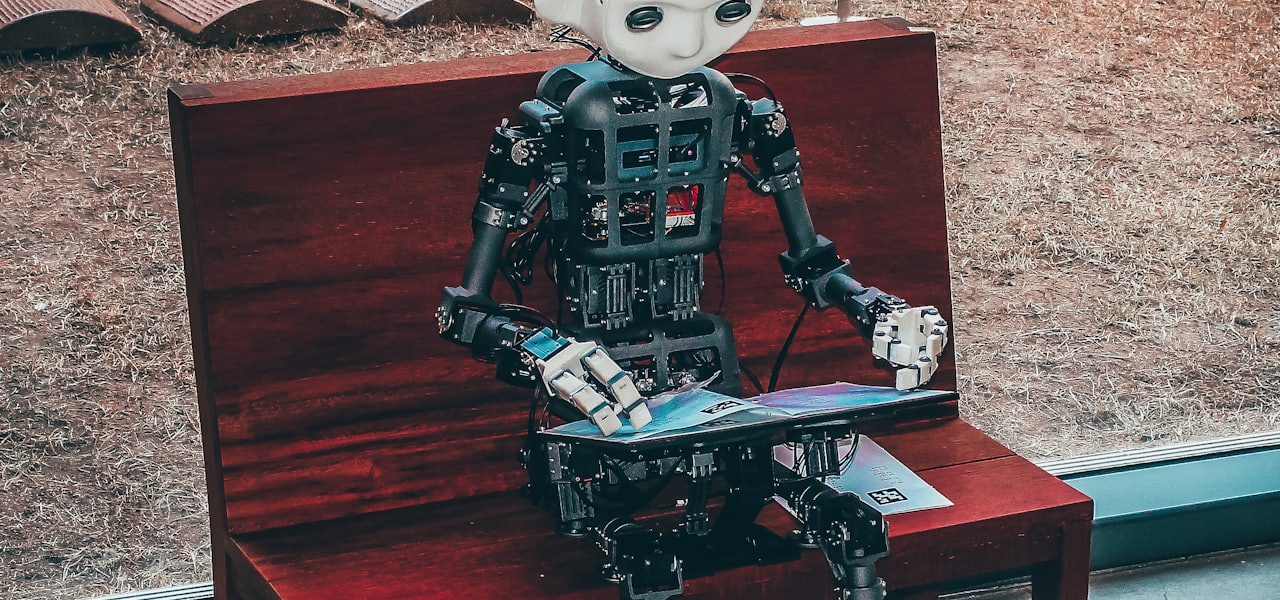
    Computational heuristic intelligence (CHI) refers to specialized programming techniques in computational intelligence (also called artificial intelligence, or AI). These techniques have the express goal of avoiding complexity issues, also called NP-hard problems, by using human-like techniques. They are best summarized as the use of exemplar-based methods (heuristics), rather than rule-based methods (algorithms). Hence the term is distinct from the more conventional computational algorithmic intelligence, or symbolic AI. An example of a CHI technique is the encoding specificity principle of Tulving and Thompson. In general, CHI principles are problem solving techniques used by people, rather than programmed into machines. It is by drawing attention to this key distinction that the use of this term is justified in a field already replete with confusing neologisms. Note that the legal systems of all modern human societies employ both heuristics (generalisations of cases) from individual trial records as well as legislated statutes (rules) as regulatory guides. Another recent approach to the avoidance of complexity issues is to employ feedback control rather than feedforward modeling as a problem-solving paradigm. This approach has been called computational cybernetics, because (a) the term 'computational' is associated with conventional computer programming techniques which represent a strategic, compiled, or feedforward model of the problem, and (b) the term 'cybernetic' is associated with conventional system operation techniques which represent a tactical, interpreted, or feedback model of the problem. Of course, real programs and real problems both contain both feedforward and feedback components. A real example which illustrates this point is that of human cognition, which clearly involves both perceptual (bottom-up, feedback, sensor-oriented) and conceptual (top-down, feedforward, motor-oriented) information flows and hierarchies. The AI engineer must choose between mathematical and cybernetic problem solution and machine design paradigms. This is not a coding (program language) issue, but relates to understanding the relationship between the declarative and procedural programming paradigms. The vast majority of STEM professionals never get the opportunity to design or implement pure cybernetic solutions. When pushed, most responders will dismiss the importance of any difference by saying that all code can be reduced to a mathematical model anyway. Unfortunately, not only is this belief false, it fails most spectacularly in many AI scenarios. Mathematical models are not time agnostic, but by their very nature are pre-computed, i.e. feedforward. Dyer [2012] and Feldman [2004] have independently investigated the simplest of all somatic governance paradigms, namely control of a simple jointed limb by a single flexor muscle. They found that it is impossible to determine forces from limb positions- therefore, the problem cannot have a pre-computed (feedforward) mathematical solution. Instead, a top-down command bias signal changes the threshold feedback level in the sensorimotor loop, e.g. the loop formed by the afferent and efferent nerves, thus changing the so-called ‘equilibrium point’ of the flexor muscle/ elbow joint system. An overview of the arrangement reveals that global postures and limb position are commanded in feedforward terms, using global displacements (common coding), with the forces needed being computed locally by feedback loops. This method of sensorimotor unit governance, which is based upon what Anatol Feldman calls the ‘equilibrium Point’ theory, is formally equivalent to a servomechanism such as a car's ‘cruise control’.

    Read more →
  • Jakub Pachocki

    Jakub Pachocki

    Jakub Pachocki (born 1991) is a Polish computer scientist and former competitive programmer. He is best known as OpenAI's chief scientist and for his role in overseeing development of GPT-4. == Background == Pachocki was born in 1991 in Gdańsk, Poland. In high school, he was a six-time finalist of the Polish Olympiad in Informatics. In 2009, he qualified for the International Olympiad in Informatics, winning a silver medal. Pachocki obtained his undergraduate degree in Computer Science from the University of Warsaw. He represented his university at the International Collegiate Programming Contest with his team winning a gold medal and coming second place overall in 2012. In the same year he was also the champion of the Google Code Jam. From 2011 to 2012, Pachocki worked at Facebook as a software engineering intern. Pachocki attended graduate school at Carnegie Mellon University, where he obtained his PhD under the supervision of Gary Miller. == Career == After graduation, Pachocki did postdoc work at Harvard University and Simons Institute for the Theory of Computing. === OpenAI === In 2017, Pachocki joined OpenAI. In 2021, he became OpenAI's research director where he led the development of GPT-4 and OpenAI Five. In May 2024, he became chief scientist after his mentor Ilya Sutskever left the company. OpenAI CEO Sam Altman has called Pachocki "easily one of the greatest minds of our generation". == Competitive programming achievements == International Olympiad in Informatics: Silver medal (2009) International Collegiate Programming Contest World Finals: Gold medal (second place overall in 2012) Google Code Jam: Champion (2012), Third place (2011) Facebook Hacker Cup: Second place (2013) TopCoder Open Algorithm: Second place (2012) A more comprehensive list of achievements can be found at the Competitive Programming Hall Of Fame website.

    Read more →
  • Meta Content Framework

    Meta Content Framework

    Meta Content Framework (MCF) is a specification of a content format for structuring metadata about web sites and other data. == History == MCF was developed by Ramanathan V. Guha at Apple Computer's Advanced Technology Group between 1995 and 1997. Rooted in knowledge-representation systems such as CycL, KRL, and KIF, it sought to describe objects, their attributes, and the relationships between them. One application of MCF was HotSauce, also developed by Guha while at Apple. It generated a 3D visualization of a web site's table of contents, based on MCF descriptions. By late 1996, a few hundred sites were creating MCF files and Apple HotSauce allowed users to browse these MCF representations in 3D. When the research project was discontinued, Guha left Apple for Netscape, where, in collaboration with Tim Bray, he adapted MCF to use XML and created the first version of the Resource Description Framework (RDF). == MCF format == An MCF file consists of one or more blocks, each corresponding to an entity. A block looks like this:The identifier is a unique identifier for that entity (more on the scope of the identifier below) and is used to refer to that entity. The following lines each specify a property and one or more values, separated by commas. Each value can be a reference to another entity (via its identifier), a string (enclosed by double quotes) or a number. For example:NOTE: The identifier must not include a comma (,) and must not be enclosed within double quotes. A common parsing failure is due to odd number of unescaped double quotes in text. For instance, "foo bar" baz" needs to be "foo bar\" baz". Commas within double quotes are not considered as value separators. Every entity has at least one property: typeOf.

    Read more →
  • Yann LeCun

    Yann LeCun

    Yann André Le Cun ( lə-KUN; French: [ləkœ̃]; usually spelled LeCun; born 8 July 1960) is a French-American computer scientist working in the fields of artificial intelligence, machine learning, computer vision, robotics and image compression. He is the Jacob T. Schwartz Professor of Computer Science at the Courant Institute of Mathematical Sciences at New York University. He served as Chief AI Scientist at Meta Platforms before co-founding Advanced Machine Intelligence Labs in December 2025. He is well known for his work on optical character recognition and computer vision using convolutional neural networks (CNNs). He is also one of the main creators of the DjVu image compression technology, alongside Léon Bottou and Patrick Haffner. He co-developed the Lush programming language with Léon Bottou. In 2018, LeCun, Yoshua Bengio, and Geoffrey Hinton received the Turing Award from the Association for Computing Machinery (ACM) for their work on deep learning. LeCun, Bengio, and Hinton, and occasionally Jürgen Schmidhuber, are sometimes referred to as the "Godfathers of AI" and "Godfathers of Deep Learning". == Early life and education == Yann André Le Cun was born on 8 July 1960 at Soisy-sous-Montmorency, in the suburbs of Paris. His surname, Le Cun, derives from the old Breton form Le Cunff and originates from the region of Guingamp in northern Brittany. Yann is the Breton form of Jean, the French form of John. He received a Diplôme d'Ingénieur from the ESIEE Paris in 1983 and a PhD in computer science from Université Pierre et Marie Curie (now Sorbonne University) in 1987, during which he proposed an early form of backpropagation, an algorithm crucial for enabling neural networks to learn. Before joining AT&T, LeCun was a postdoctoral researcher for a year, starting in 1987, supervised by Geoffrey Hinton at the University of Toronto. LeCun has three sons, and his brother is employed by Google. He has American citizenship. == Career and research == LeCun's career has been spent primarily at Bell Labs, New York University and Meta Platforms, Inc. === Bell Labs === In 1988, LeCun joined the Adaptive Systems Research Department at AT&T Bell Laboratories in Holmdel, New Jersey, United States, headed by Lawrence D. Jackel, where he developed a number of new machine learning methods, such as a biologically inspired model of image recognition called convolutional neural networks (LeNet), the "Optimal Brain Damage" regularization methods, and the Graph Transformer Networks method (similar to conditional random field), which he applied to handwriting recognition and Optical character recognition (OCR). The bank check recognition system that he helped develop was widely deployed by NCR and other companies. In 1996, he joined AT&T Labs-Research as head of the Image Processing Research Department, which was part of Lawrence Rabiner's Speech and Image Processing Research Lab, and worked primarily on the DjVu image compression technology, a format designed for efficient distribution of scanned documents, and used by the Internet Archive to provide access to digitized texts. His collaborators at AT&T include Léon Bottou and Vladimir Vapnik. === New York University === After a brief tenure as a fellow of NEC Research Institute, LeCun joined New York University in 2003, where he is Jacob T. Schwartz Chaired Professor of Computer Science and Neural Science at the Courant Institute of Mathematical Sciences and the Center for Neural Science. At NYU, he has worked primarily on energy-based models for supervised and unsupervised learning, feature learning for object recognition in computer vision, and mobile robotics. In 2012, he became the founding director of the NYU Center for Data Science. On 9 December 2013, LeCun became the first director of Meta AI Research in New York City and in early 2014 stepped down from the NYU–CDS directorship. In 2013, he and Yoshua Bengio co-founded the International Conference on Learning Representations, which adopted a post-publication open review process he previously advocated on his website. He was the chair and organiser of the "Learning Workshop" held every year between 1986 and 2012 in Snowbird, Utah. He is a member of the Science Advisory Board of the Institute for Pure and Applied Mathematics at UCLA. He is the co-director of the Learning in Machines and Brain research program (formerly Neural Computation & Adaptive Perception) of CIFAR. In 2016, he was the visiting professor of computer science on the Chaire Annuelle Informatique et Sciences Numériques at Collège de France in Paris, where he presented the leçon inaugurale (inaugural lecture). In 2023, he was named as the inaugural Jacob T. Schwartz Chaired Professor in Computer Science at NYU's Courant Institute. LeCun is also a scientific advisor to French research group Kyutai which is being funded by Xavier Niel, Rodolphe Saadé, Eric Schmidt, and others. === Meta Platforms === LeCun joined Facebook (now Meta Platforms) in 2013 as chief AI scientist and led the company's AI research laboratory, FAIR. === AMI Labs === On 19 November 2025, LeCun confirmed that he would be leaving Meta after ten years to found his own company focused on world-model architectures and human-like artificial intelligence he calls superintelligence. The company he founded, Advanced Machine Intelligence Labs (or AMI Labs), is run by CEO Alex LeBrun, with LeCun serving as Executive Chair. This venture is focused on building AI "world models": systems that learn to understand the physical world's structure and dynamics rather than just predict text like large language models. In March 2026, AMI announced it had raised $1.03 billion in funding at a $3.5 billion pre-money valuation. The funding round was co-led by investors including Cathay Innovation, Greycroft, Hiro Capital, HV Capital and Bezos Expeditions. In January 2026, LeCun became founding chair of the Technical Research Board of Logical Intelligence, an AI company developing energy-based (EBM) reasoning systems. == Honours and awards == LeCun is a member of the US National Academy of Sciences, National Academy of Engineering and the French Académie des Sciences. He has received honorary doctorates from Instituto Politécnico Nacional (IPN) in Mexico City in 2016, from EPFL in 2018, from Université Côte d'Azur in 2021, from Università di Siena in 2023, and from Hong Kong University of Science and Technology in 2023. In 2014, he received the IEEE Neural Network Pioneer Award and in 2015, the PAMI Distinguished Researcher Award. In 2018, LeCun was awarded the IRI Medal, established by the Industrial Research Institute (IRI), and the Harold Pender Award, given by the University of Pennsylvania. In 2019, he received the Golden Plate Award of the American Academy of Achievement. In March 2019, LeCun won the 2018 Turing Award, sharing it with Yoshua Bengio and Geoffrey Hinton. In 2022, he received the Princess of Asturias Award in the category "Scientific Research", along with Yoshua Bengio, Geoffrey Hinton and Demis Hassabis. In 2023, the President of France made him a Chevalier (Knight) of the French Legion of Honour. During the World Economic Forum (WEF) 2024 in Davos, he received the Global Swiss AI Award 2023. The same year, he received the grand prize of the VinFuture Prize alongside Yoshua Bengio, Jensen Huang, Geoffrey Hinton, and Fei-Fei Li for their groundbreaking contributions to neural networks and deep learning algorithms. In 2025 he was awarded the Queen Elizabeth Prize for Engineering jointly with Yoshua Bengio, Bill Dally, Geoffrey E. Hinton, John Hopfield, Jensen Huang and Fei-Fei Li.

    Read more →
  • Keyword extraction

    Keyword extraction

    Keyword extraction is tasked with the automatic identification of terms that best describe the subject of a document. Key phrases, key terms, key segments or just keywords are the terminology which is used for defining the terms that represent the most relevant information contained in the document. Although the terminology is different, function is the same: characterization of the topic discussed in a document. The task of keyword extraction is an important problem in text mining, information extraction, information retrieval and natural language processing (NLP). == Keyword assignment vs. extraction == Keyword assignment methods can be roughly divided into: keyword assignment (keywords are chosen from controlled vocabulary or taxonomy) and keyword extraction (keywords are chosen from words that are explicitly mentioned in original text). Methods for automatic keyword extraction can be supervised, semi-supervised, or unsupervised. Unsupervised methods can be further divided into simple statistics, linguistics or graph-based, or ensemble methods that combine some or most of these methods.

    Read more →
  • Andrej Karpathy

    Andrej Karpathy

    Andrej Karpathy (born 23 October 1986) is a Slovak-Canadian AI researcher, who co-founded and formerly worked at OpenAI, where he specialized in deep learning and computer vision. He also worked as the director of artificial intelligence and Autopilot Vision at Tesla, and in 2024 he founded Eureka Labs, an AI education platform. In 2026 he joined Anthropic as part of the pretraining team. == Education and early life == Karpathy was born in Bratislava, Czechoslovakia (now Slovakia), and moved with his family to Toronto when he was 15. He completed his Computer Science and Physics bachelor's degrees at University of Toronto in 2009 and his master's degree at University of British Columbia in 2011, where he worked on physically simulated figures (for example, a simulated runner or a simulated person in a crowd) with his adviser Michiel van de Panne. In 2006, Karpathy began posting videos on YouTube on his channel, badmephisto. He garnered fame by posting Rubik's cube tutorials which have been used by famous speedcubers such as Feliks Zemdegs. The channel has over 9 million views as of June 2025. Karpathy received a PhD from Stanford University in 2015 under the supervision of Fei-Fei Li, focusing on the intersection of natural language processing and computer vision, and deep learning models suited for this task. == Career and research == He authored and was the primary instructor of the first deep learning course at Stanford, CS 231n: Convolutional Neural Networks for Visual Recognition. The course became one of the largest classes at Stanford, growing from 150 students in 2015 to 750 in 2017. Karpathy is a founding member of the artificial intelligence research group OpenAI, where he was a research scientist from 2015 to 2017. In June 2017 he became Tesla's director of artificial intelligence and reported to Elon Musk. He was named one of MIT Technology Review's Innovators Under 35 for 2020. After taking a several-months-long sabbatical from Tesla, he announced he was leaving the company in July 2022. As of February 2023, he makes YouTube videos on how to create artificial neural networks. On February 9, 2023, Karpathy announced he was returning to OpenAI. A year later on February 13, 2024, an OpenAI spokesperson confirmed that Karpathy had left OpenAI. In the same year, he was named one of Time Magazine's 100 Most Influential People in AI. On July 16, 2024, Karpathy announced on his X account that he started a new AI education company called Eureka Labs. Their first product was the AI course, LLM101n. He also has a broader educational effort, the "Zero to Hero" series on LLM fundamentals. The company also advocates for AI teaching assistants, a concept which has been criticized due to data privacy concerns and the removal of personal connection between teacher and student. In February 2025, Karpathy coined the term vibe coding to describe how AI tools allow hobbyists to construct apps and websites just by typing prompts. On May 19, 2026, he announced that he joined Anthropic via a statement on X, while the company stated that he will be leading a team for research in pretraining.

    Read more →
  • OpenL Tablets

    OpenL Tablets

    OpenL Tablets is a business rule management system (BRMS) and a business rules engine (BRE) based on table representation of rules. Engine implements optimized sequential algorithm. OpenL includes such table types as decision table, decision tree, spreadsheet-like calculator. == History == The OpenL Tablets project was started as an in-house development project in 2003 and later in 2006 was uploaded to SourceForge. Initially it was an open-source business rule engine for Java. Starting from version 5 it became a BRMS. == Technology == OpenL Tablets engine is specially designed for business rules and uses table rules presentation. Table format enforces rules to be structured and format itself is close to tables found in various business documents. OpenL Tablets is based on OpenL framework for creating custom languages running on Java VM. The engine is designed to allow pluggable language implementations. Currently, it uses 2 languages: table structure for rules format and java-like for code snippets in rules. Java-like language is Java 5.0 implementation with Business User Extensions. OpenL Tablets rules are mixture of declarative programming for rules logic and imperative programming for workflow control. Table formats are flexible enough to match the semantics of the problem domain. Tests, traces, benchmarks are integral part of the engine. It also provides powerful type definition capabilities to handle rules domain model inside rules files. The project is written in Java, but can be used at any platform using Service-oriented architecture approach, e.g. via web service. === Patents === The OpenL Tablets engine has patent pending validation feature. There are usages of OpenL Tablets which may be patented. == BRMS == OpenL Tablets includes several productivity tools and applications addressing BRMS related capabilities. They include web application to edit rules called OpenL WebStudio, web application to deploy rules as web services, Rules Repository to store and manage rules, Eclipse plug-ins to work with rules projects. == Related systems == CLIPS: public domain software tool for building expert systems. ILOG rules: a business rule management system. JBoss Drools: a business rule management system (BRMS). JESS: a rule engine for the Java platform - it is a superset of CLIPS programming language. Prolog: a general purpose logic programming language. DTRules: a Decision Table-based, open-sourced rule engine for Java.

    Read more →